Can Parrots Actually Understand What They’re Saying?
Published on: April 23, 2026 | Last Updated: April 23, 2026
Written By: Suzanne Levine
You watch your parrot chatter away and can’t help but wonder if those words hold any real meaning or if it’s all just clever mimicry. This question often leaves owners feeling uncertain about their bird’s intelligence and connection to them.
Based on years of caring for parrots like my playful Kiwi and smart Sage, I’ll guide you through the key insights. Here are three essential takeaways:
- Parrots blend mimicry with context to show understanding.
- Their brain structure supports complex language processing.
- Positive interactions boost their communication skills.
You’ll walk away with straightforward advice to deepen your bond. We’ll dive into: speech mimicry, cognitive evidence, species differences, training methods, real-life stories.
Do Parrots Really Comprehend Human Speech?
Many people assume parrots just repeat sounds without meaning, but my years living with these feathered intellectuals tell a different story. True language understanding involves connecting words to objects, actions, or emotions, while mimicry is simply copying sounds.
My Green-cheeked Conure, Kiwi, demonstrates this beautifully. He doesn’t just say “apple” randomly; he says it while staring at the fruit bowl or when I’m slicing one for myself. That’s context, not coincidence.
Scientific research, especially with African Grey parrots, supports this. One famous study involved a parrot named Alex. Alex could identify colors, shapes, and quantities, showing he grasped the concepts behind the words. He wasn’t just making noise; he was communicating specific ideas.
Parrots are masters of social cues. My Sun Conure, Sunny, screams “Step up!” when he wants to leave his cage, but he says it softly when he’s already on my hand and content. He adjusts his tone and timing based on the social situation, a sign of sophisticated communication.
Key Differences: Mimicry vs. Understanding
- Mimicry: Repeating a word or phrase without any connection to its meaning. It’s like a recording.
- Understanding: Using a word in the correct context to achieve a specific goal, like asking for food or expressing an emotion.
The Science of Parrot Language and Cognition
A parrot’s brain is surprisingly complex. They have a region called the “core” and “shell” system for processing sounds. Think of it like a symphony orchestra, where different sections work together to create and understand complex melodies of speech.
This allows them to do more than just mimic; they can grasp semantics (the meaning of words) and even some basic syntax (how words are ordered).
Studies on parrot cognition are mind-blowing. Research has shown that some parrots can solve complex puzzles, remember hidden objects, and even categorize items by color or material. My African Grey, Sage, can pick out his blue toy from a pile of others every single time. That’s not just memory; it’s advanced reasoning. Cognitive enrichment through brain games keeps parrots sharp. There are 10 brain games you can try to keep Sage mentally engaged.
Parrot Brain Power: A Quick Look
| Cognitive Ability | What It Means | Real-World Example |
|---|---|---|
| Reasoning | Solving problems to get a reward | Figuring out how to open a latch on a food container |
| Memory | Recalling people, words, and locations | Greeting a family member by name after a long absence |
| Categorization | Grouping objects by shared traits | Identifying all “round” toys versus all “chewable” toys |
Their abilities go far beyond what we once thought. Parrots don’t just hear words; they process them with a level of intelligence we are only beginning to fully appreciate. When we compare parrot cognition with other animals, their problem-solving and memory often hold up surprisingly well. Such cross-species comparisons shed light on the diversity and evolution of intelligence.
How Parrots Learn and Use Vocabulary
Training a parrot is less about drilling commands and more about building a shared language through joyful interaction. The most effective method is positive reinforcement, which rewards the bird for attempts and successes, making learning a fun game.
Steps for Training with Positive Reinforcement
- Choose a single, simple word like “hello” or your bird’s name.
- Say the word clearly and enthusiastically when your parrot is calm and attentive.
- The moment your parrot makes any sound in response, immediately give a tiny, high-value treat like a piece of pine nut or millet spray.
- Repeat this process in short, 5-10 minute sessions a few times a day.
- Be incredibly consistent with your chosen word and the immediate reward.
Personal Tips from Teaching Sunny, My Sun Conure
My Sun Conure, Sunny, learned “pretty bird” by associating it with his favorite activity: looking out the window. I found that connecting words to specific actions or highly positive experiences made them stick much faster in his mind. I’d say “pretty bird” every time he fluffed his feathers in the sunlight, and he eventually started chirping it back. The key was my own genuine excitement; he picked up on my happy tone and wanted to join in.
Common Training Mistakes and How to Avoid Them
- Rushing the Process: Expecting a new word in one session leads to frustration for both of you. Birds learn at their own pace.
- Inconsistent Rewards: If you don’t reward the attempt every single time at first, the parrot gets confused about what you want.
- Long Training Sessions: A parrot’s attention span is short. Keeping sessions brief prevents boredom and keeps it fun.
- Showing Frustration: Never scold a parrot for not speaking. This only teaches them to fear training time.
From my experience with all my birds, patient and kind training isn’t just a technique; it’s a fundamental part of ethical parrot guardianship that builds unshakable trust. Pushing a bird too hard can damage your bond and their well-being.
Parrot Species and Their Comprehension Abilities
Just like dog breeds have different instincts, parrot species come with their own unique wiring for communication. Some parrots are born mimics with a knack for context, while others express themselves more through body language and whistles.
Comparing Species: African Greys vs. Cockatiels
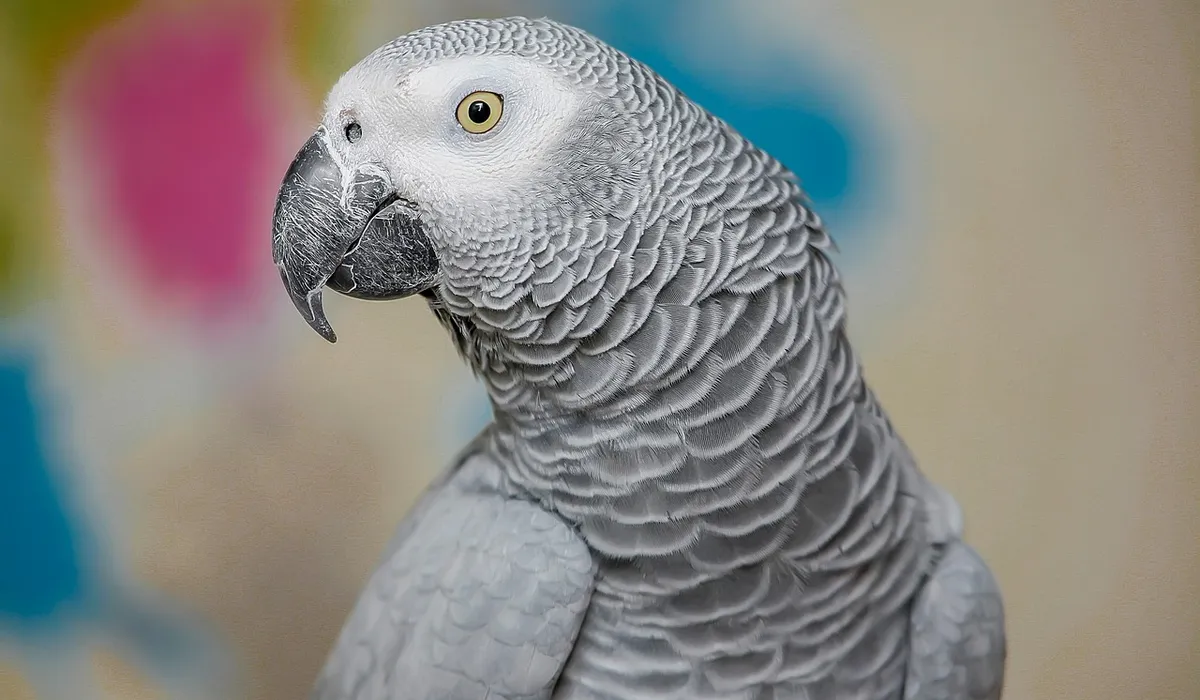
My African Grey, Sage, doesn’t just repeat words; he uses them appropriately, like saying “night night” when his cage cover goes on. His comprehension of phrases and situations is profound. In contrast, a cockatiel is more likely to master charming whistles and a few simple words. The difference often lies in the bird’s natural social complexity and brainpower developed for life in their native habitats.
Parrot Species Comprehension Ranking
| Species | Typical Talking Ability | Typical Comprehension Level |
|---|---|---|
| African Grey | Extensive vocabulary, clear speech | Exceptionally High |
| Amazon Parrots | Very good, clear speech | High |
| Eclectus Parrot | Good speaking ability | Moderate to High |
| Quaker Parrot | Good speaking ability | Moderate |
| Sun Conure (like Sunny) | Limited vocabulary, often screechy | Moderate (strong emotional comprehension) |
| Cockatiel | Limited words, excellent whistler | Low to Moderate |
| Budgerigar (Budgie) | Can learn many words (often high-pitched) | Low to Moderate |
Why Some Parrots Have Limited Speech Skills
Species like Kakarikis or many Poicephalus parrots (like Senegals) aren’t known for talking. This isn’t a lack of intelligence but a different evolutionary focus. Their wild survival may have depended more on camouflage, swift flight, or complex non-verbal signals than on vocal mimicry. They are still wonderfully intelligent and communicative in their own ways.
Ultimately, the individual bird’s personality is the biggest factor, and a quiet parrot is not a failed parrot. My Green-cheeked Conure, Kiwi, says only one word but understands a huge amount about our daily routine and my moods. Appreciating your parrot for who they are is the greatest understanding of all.
Enhancing Meaningful Communication with Your Parrot
You can actively build your parrot’s understanding by making speech a rewarding, contextual part of their day. Consistency turns random sounds into purposeful communication your bird genuinely uses. It’s not just about mimicry; it’s about meaningful interaction.
Practical Activities to Boost Perception and Intention
- Play the “Naming Game” by holding up a favorite toy or treat and clearly saying its name before giving it to them.
- Practice “Choice-Based” learning by offering two different food items and labeling each, rewarding them for looking at or moving toward the one you name.
- Use simple question-and-answer routines, like asking “Wanna shower?” while misting them, so they learn to associate the phrase with the action.
Reinforcing Words in Daily Routines
Weave vocabulary into everything you do together. This daily repetition embeds words in real-life situations, giving them concrete meaning.
- Say “Step up” every single time you ask your parrot to climb onto your hand, followed by praise or a small treat.
- Announce “Good morning!” when you uncover their cage and “Good night!” when you cover it, creating a predictable verbal cue for daily events.
- Label foods during mealtimes, clearly saying “apple,” “nut,” or “pellet” as you offer them.
Ideas for Social Interaction
Parrots are flock animals who learn through social dynamics. Including them in your household’s social life encourages them to use speech as a bonding tool.
- Have “conversations” where you respond verbally to their sounds, even if it’s just babble, to show that vocalizations get a social response.
- Place their cage in a busy family area so they can observe and participate in daily conversations and activities.
- Teach all family members to use the same words for commands and objects to avoid confusing your bird.
Stories from My Experience with Sage
My African Grey, Sage, has shown me what advanced comprehension looks like. He doesn’t just label objects; he uses words to express his wants and observations logically.
One afternoon, I was eating an apple. Sage looked at me, then at his empty food bowl, and clearly said, “Sage want apple.” That wasn’t mimicry. He identified the object, associated it with his own desire, and constructed a request. Another time, my husband walked in wearing a new bright red hat. Sage stared for a moment and stated, “That’s a hat.” He wasn’t repeating a practiced phrase; he was making a novel observation about a change in his environment.
Common Myths About Parrot Understanding
Many people underestimate the intelligence behind the beak. Dispelling these myths is the first step to appreciating your parrot’s true cognitive abilities.
Debunking Misconceptions
- Myth: Parrots are just feathered recorders mindlessly repeating sounds.
- Fact: Research shows many parrot species use words referentially, applying labels to specific objects, people, and actions with clear intent.
- Myth: A parrot’s speech is always a direct, immediate imitation of something just heard.
- Fact: Parrots often use learned phrases hours or days later in an appropriate context, demonstrating memory and situational understanding.
- Myth: If a parrot doesn’t talk, it doesn’t understand anything.
Fact: Comprehension often far outpaces a parrot’s ability or desire to vocalize; a silent parrot can still understand dozens of words and commands.
Scripted Videos and Realistic Expectations
It’s easy to watch a viral video and expect your parrot to deliver Shakespearean monologues. Remember that for every amazing clip, there are countless hours of bonding and training that went unseen.
Parrot speech is often situational and spontaneous, not a scripted performance. They are more likely to say “I love you” when you’re cuddling than to recite a poem on command. Set realistic goals focused on meaningful, one or two-word exchanges that enrich your daily life together.
Emotion and Reasoning Through Speech
Parrots absolutely convey emotion and logic with their words. My conure, Kiwi, will mutter “What’s that?” in a worried tone when he hears a strange noise, showing both curiosity and concern.
They use speech to solve problems. A parrot might learn that saying “Want out” leads to the cage door opening. They aren’t just making a sound; they are using a specific tool-a word-to achieve a desired outcome, which is a clear sign of reasoning.
FAQs
Can parrots understand words they hear but don’t repeat?
Yes, many parrots comprehend words they hear regularly without ever vocalizing them themselves. They may respond to commands or show recognition through actions, like looking at an object when it’s named. This raises the question: do parrots truly understand human language, or are they simply associating sounds with outcomes? Some researchers argue they can grasp basic meanings and contexts beyond mimicry.
How do parrots show that they understand what is being said to them?
Parrots often demonstrate understanding by performing appropriate actions, such as stepping up when asked or fetching a specific toy. One common training milestone is teaching the parrot to step up onto your hand. It typically uses a gentle cue and positive reinforcement. They might also use context-appropriate vocalizations or body language to communicate their comprehension.
Is a parrot’s understanding similar to a child’s language development?
Parrots can learn words and associations in ways that resemble early child language acquisition, such as labeling objects and using simple phrases. However, their cognitive processes are distinct and tailored to social and survival needs in their environment. Learn more about how intelligent parrots really are.
Can parrots understand multiple languages?
Parrots can learn to associate words with meanings regardless of the language, as they focus on sound patterns and context rather than linguistic rules. With consistent exposure, they may respond to commands or labels in different languages. However, their abilities vary, and it’s essential to understand what pet parrots can learn for effective training.
Do parrots have a critical period for learning to understand speech?
Young parrots often learn more quickly and deeply during their early developmental stages, similar to a sensitive period for language acquisition. However, adult parrots can still learn new words and concepts with patient, positive reinforcement training. In a beginner’s guide, target training is presented as a foundational skill that builds focus, cooperation, and clear communication. It’s a practical first step for teaching parrots to respond to cues and to stay engaged during training.
Final Thoughts
The magic isn’t in a parrot speaking human words, but in the shared connection you build by understanding what those sounds mean to them. Focus on the context, the emotion, and the consistent, positive reinforcement that helps your bird use its vocal talents in a way you both can appreciate.
Owning a parrot is a long-term commitment to a brilliant, emotional being that deserves more than just food and a cage. Their complex minds need constant enrichment, patient training, and a forever home dedicated to learning their unique language of love and intelligence. A parrot can be the right pet only if you’re in it for life. That means researching needs, sourcing ethically, and providing ongoing enrichment and care.
Further Reading & Sources
- Talking bird – Wikipedia
- Why Do Parrots Talk? | Audubon
- Do parrots actually understand what they’re saying? | Live Science
Suzanne Levine is a dedicated parrot enthusiast and experienced avian caregiver with over 15 years of hands-on experience in parrot care. As the founder of Parrot Care Central, Suzanne is passionate about sharing her knowledge and insights to help fellow parrot owners provide the best possible care for their feathered friends. Her expertise spans nutrition, behavior, health, and enrichment, making her a trusted resource in the parrot care community.
Enrichment Activities