
Are Parrots Mammals, Reptiles, or Vertebrates? Your Simple Guide
Published on: July 22, 2026 | Last Updated: July 22, 2026
Written By: Suzanne Levine
Have you ever looked at a parrot and wondered if it’s more like a mammal, a reptile, or something entirely different? This question pops up often, and getting it wrong can lead to confusion about how to best care for these vibrant birds.
I’ve spent years with parrots like Kiwi, my playful Green-cheeked Conure, and I’m here to break it down for you. You’ll walk away with a crystal-clear picture of where parrots belong in the animal world. Let’s dive into three key insights right away:
- Mammals nurse their young with milk, but parrots feed chicks regurgitated food-a big difference I’ve seen with my own birds.
- Reptiles rely on external heat sources, while parrots like Sunny, my Sun Conure, generate their own body warmth.
- All parrots are vertebrates, meaning they have backbones, which supports their active, climbing lifestyles.
No more guessing-this guide gives you reliable, easy-to-follow explanations. We’ll explore: Parrot biology, Animal classification, Debunking myths.
Unpacking Parrot Classification: A Bird’s-Eye View
Think of animal classification like a massive, organized library, where every creature has its specific shelf and section. Understanding this system helps you grasp your parrot’s unique needs, from diet to behavior, because you know exactly what kind of animal you’re living with.
Let’s break down the main levels, from the broadest category to the most specific:
- Kingdom: This is the biggest section, like “Fiction” or “Non-Fiction.” Parrots belong to Animalia, the animal kingdom.
- Phylum: This narrows it down further. Parrots are Chordates, meaning they have a backbone, placing them in the same massive group as mammals and reptiles.
- Class: Here’s where they really find their home. Parrots are in the class Aves, the birds.
- Order: This is the family name. For parrots, it’s Psittaciformes, and individual birds are called psittacines.
Knowing your parrot is a psittacine bird in the class Aves immediately tells you they are built for flight, communication, and complex social interaction.
Are Parrots Mammals? The Feathered Facts
Mammals share a specific set of blueprints. If an animal checks these boxes, it’s a mammal. Let’s see how parrots measure up.
Key mammal traits include:
- Giving birth to live young
- Producing milk via mammary glands to feed their babies
- Having hair or fur on their bodies
- Being warm-blooded (endothermic)
Now, let’s look at our feathered friends. Parrots lay eggs in a nest, have beautiful feathers covering their skin, and possess a beak for feeding-not a single mammary gland in sight.
I remember watching my Green-cheeked Conure, Kiwi, meticulously shred paper to line her nesting box. She was preparing for eggs, a behavior utterly foreign to any mammal I’ve cared for. That intense, instinctual drive to create a safe space for her future chicks highlighted the fundamental biological divide between our warm-blooded groups.
While we both share the trait of being warm-blooded, that’s where the mammal-parrot similarity ends. Their reproductive strategy, body covering, and parental care are worlds apart. Many parrot species form long-lasting monogamous bonds. They often show pair-based courtship and cooperative parental care.
Reptiles vs. Parrots: An Evolutionary Tale
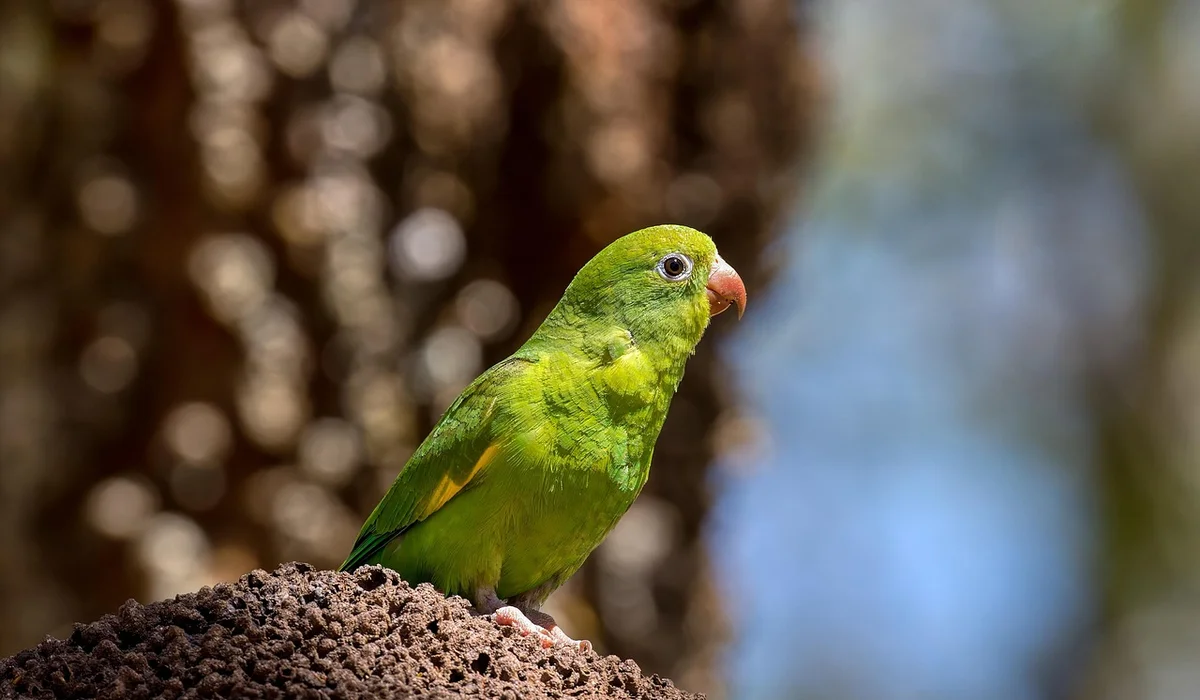
Picture a world ruled by dinosaurs, and you’re imagining the ancient relatives of our modern parrots. Birds, including parrots, are considered the living descendants of theropod dinosaurs. So, are parrots descendants of dinosaurs? The short answer is yes—parrots are living proof that the age of dinosaurs continues in birds today. That’s right, my chatty Green-cheeked Conure, Kiwi, shares a deep evolutionary history with creatures like Velociraptors.
But that family resemblance only goes so far. The biggest difference lies in how they manage their body temperature.
- Reptiles are ectotherms, relying on the sun’s warmth to heat their bodies. You’ll often see a bearded dragon basking under a lamp.
- Parrots are endotherms, generating their own internal heat to maintain a constant, high body temperature, which fuels their high-energy antics.
The physical distinctions are just as dramatic.
- Reptiles are covered in scales for protection and to prevent water loss.
- Parrots are adorned with complex feathers designed for flight, insulation, and stunning displays of color.
Parrots also evolved some very specialized tools for their arboreal lifestyle.
- Zygodactyl Feet: Two toes point forward and two point backward. This gives them a super-strong grip, perfect for climbing and deftly handling food. Watching my conure use her feet like hands to hold a berry never gets old.
- Powerful Beaks: A parrot’s beak is a multitool. It’s strong enough to crack the toughest nuts yet sensitive enough to preen each individual feather. It’s nothing like the simple, pointed mouth of a lizard.
Vertebrates or Invertebrates? Parrots’ Backbone Basics
Let’s get straight to the point. Parrots are absolutely, 100% vertebrates. This classification is one of the most fundamental in the animal kingdom.
The difference is all in the backbone.
- Invertebrates lack a spinal column. Think of insects like ants, soft-bodied creatures like jellyfish, or shelled animals like clams.
- Vertebrates possess an internal skeleton with a spine made of multiple vertebrae. This group includes mammals, reptiles, amphibians, fish, and all birds.
That internal backbone is a game-changer. It provides the rigid, yet flexible, support system that makes flight possible. A parrot’s spine acts as the central anchor for the powerful flight muscles that attach to their keel bone.
This vertebrate structure also protects the spinal cord, a critical part of the central nervous system. A well-protected nervous system is a key ingredient for the remarkable intelligence seen in parrots, macaws, and cockatoos. My African Grey, Sage, can solve complex puzzles, a feat that relies on sophisticated neural pathways housed safely within her vertebrate frame.
From the massive Hyacinth Macaw to the tiny Budgerigar, every single bird species is a vertebrate. Their backbone is the literal and figurative support for everything that makes a parrot a parrot.
What Makes Parrots Unique in the Bird World
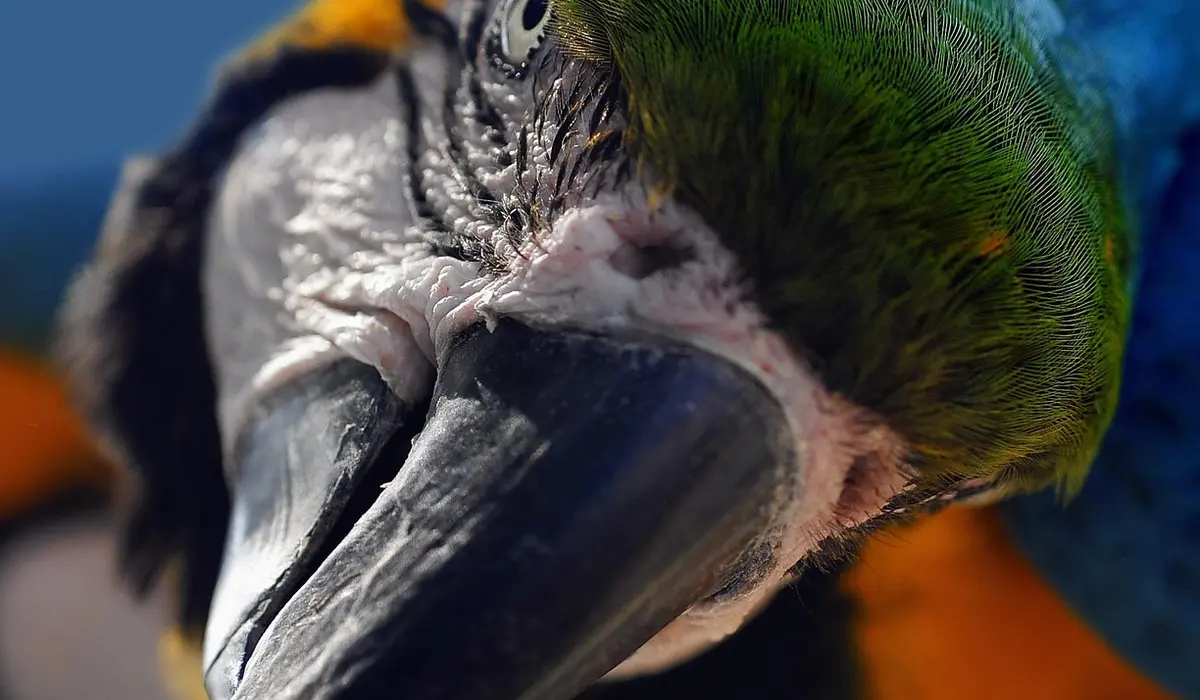
Parrots stand out in the avian kingdom with their remarkable intelligence. My African Grey, Sage, can solve puzzles that would stump many other pets, showing a level of problem-solving I’ve only seen in highly intelligent creatures. When people talk about smart, intelligent birds, African Grey parrots are often cited as prime examples. This cognitive ability is a hallmark of the parrot family.
Their capacity for vocal mimicry is legendary. My Green-cheeked Conure, Kiwi, doesn’t just copy sounds-he understands context, using specific whistles when he wants attention or food. This complex communication goes far beyond simple repetition.
Parrots form deep social bonds that last a lifetime. My Sun Conure, Sunny, follows me from room to room and becomes visibly distressed when separated, demonstrating the strong flock mentality these birds possess. In the wild, this social structure is crucial for survival.
These birds evolved in tropical and rainforest habitats, which explains many of their adaptations. Their strong, curved beaks are perfect for cracking hard nuts and climbing, while their zygodactyl feet (two toes forward, two back) give them superior gripping ability. Even common pet budgerigars retain these wild traits.
How Parrot Biology Influences Your Daily Care
Understanding their vertebrate and bird classification directly shapes their dietary needs. Parrots require a varied, nutrient-rich diet that mirrors what they’d find in their natural habitats—not just seeds, but fruits, vegetables, and specialized pellets. Their high metabolisms demand constant fuel. For a species-specific, complete feeding guide on parrot diet requirements, consult the guide. It outlines safe foods, portions, and feeding schedules.
Housing must accommodate their vertebrate need for movement and flight. I learned the hard way that small cages cause stress behaviors; my parrots now have enclosures large enough for full wing stretches and short flights between perches. Proper space prevents both physical and psychological issues.
Their social nature demands consistent interaction and enrichment. Parrots are not decoration—they’re companion animals who need daily communication, training sessions, and mental challenges to thrive in captivity. Neglecting this aspect leads to screaming, feather plucking, and other behavioral problems. Their social complexity and vocal abilities are what make parrots so unique compared with other pets. They form strong bonds and enjoy ongoing mental challenges, unlike many other common companions.
Nutrition and Feeding Tips for Your Feathered Friend
- Start with a high-quality pellet base-this ensures they get essential vitamins and minerals that seeds alone can’t provide
- Add fresh vegetables daily-my birds love chopped bell peppers, carrots, and dark leafy greens
- Include fruits in moderation-berries and melons are favorites, but limit sugary fruits like grapes
- Offer healthy proteins-cooked eggs and legumes give them necessary amino acids
- Provide constant access to clean water-change it at least twice daily
From experience, I never feed my parrots avocado, chocolate, or caffeine—these are toxic and can cause serious health issues. Also avoid salty foods and anything with artificial sweeteners, especially those listed in the toxic foods for parrots. Salty foods and anything with artificial sweeteners are also harmful.
Creating a Parrot-Friendly Home Environment
- Choose multiple perches of different diameters and textures to exercise their feet
- Provide destructible toys made of bird-safe wood, leather, and paper for mental stimulation
- Install play gyms outside the cage for supervised exploration time
- Ensure windows and mirrors are covered or marked to prevent collisions during flight
- Remove toxic houseplants and secure electrical cords from curious beaks
I create foraging opportunities by hiding treats in paper bags or puzzle toys, which mimics their natural behavior of searching for food. This simple enrichment prevents boredom and encourages natural behaviors.
Position cages in family areas where birds can observe household activities. My parrots are happiest when they’re part of the action, just as they would be in a wild flock. Isolation leads to stress and behavioral issues over time.
FAQs
Are parrots vertebrates or invertebrates?
Parrots are vertebrates, meaning they have a backbone. This classification supports their active lifestyle and intelligence. Parrots are widely regarded as highly intelligent birds. They can solve puzzles and mimic human speech, showcasing their cognitive abilities.
What does it mean for a parrot to be a vertebrate?
Being a vertebrate means parrots possess an internal skeleton with a spine. This structure allows for flight and protects their nervous system.
How does the vertebrate nature of parrots affect their care?
Their vertebrate biology requires cages that allow for movement and climbing to support spinal health. Proper perches and toys help prevent injuries and promote natural behaviors.
Are all birds, including parrots, considered vertebrates?
Yes, all bird species are vertebrates, including parrots. This is a key trait they share with mammals, reptiles, and fish. Parrots themselves cover many different types and species. This complete species guide will walk you through their diversity.
Why is knowing parrots are vertebrates important for pet owners?
Understanding they are vertebrates highlights the need for a diet and environment that support bone and muscle health. It also explains their ability to learn complex tasks and communicate.
Closing the Loop
Parrots are vibrant vertebrates, not mammals or reptiles, so they need bird-specific care like varied diets and mental stimulation. Watching my Green-cheeked Conure, Kiwi, explore new toys reminds me how their unique biology demands attention to prevent boredom and health woes.
Commit to lifelong learning about parrot behavior and nutrition to be a stellar pet parent. Your dedication to understanding their world makes all the difference in nurturing a thriving, chirpy companion for years to come. Regular, short training sessions using positive reinforcement can help you address common behavioral issues and build a stronger bond. By making training a daily routine, you guide their behavior and enrich their world.
Further Reading & Sources
- Parrot – Wikipedia
- Parrot – Classification, Features, Types, Behavior, Diet and Uses
- Parrot | Description, Types, & Facts | Britannica
Suzanne Levine is a dedicated parrot enthusiast and experienced avian caregiver with over 15 years of hands-on experience in parrot care. As the founder of Parrot Care Central, Suzanne is passionate about sharing her knowledge and insights to help fellow parrot owners provide the best possible care for their feathered friends. Her expertise spans nutrition, behavior, health, and enrichment, making her a trusted resource in the parrot care community.
Health & Wellness