
How Many Different Types of Parrots Are There?
Published on: April 14, 2026 | Last Updated: April 14, 2026
Written By: Suzanne Levine
You might be wondering just how many kinds of parrots exist, feeling a bit overwhelmed by the sheer diversity and curious where to even begin. I’ve spent years caring for my own flock-Kiwi, Sunny, and Sage-and that personal journey has taught me how fascinating and varied these birds truly are.
I’m here to help by breaking down the essentials you need to know, starting with these key takeaways:
- The total number of parrot species is a specific, surprising figure.
- Parrots are grouped into distinct families, each with unique traits.
- Understanding these groups helps you appreciate their global distribution and conservation needs.
You’ll get clear, straightforward advice that makes parrot diversity easy to grasp. This guide covers: total species count, major family groups, size variations, geographic locations, and conservation status. We’ll also explain how big parrots can get as part of the size guide. Size varies widely between species.
What Exactly Is a Parrot? Key Traits and Taxonomy
When you picture a parrot, you likely imagine a brightly colored bird that can talk. But the definition of a parrot is rooted in specific physical and behavioral traits that unite this incredible family of birds. My own Green-cheeked Conure, Kiwi, is a perfect, squawking example of these features in action.
All true parrots share a unique set of characteristics. Their most famous tool is a strong, curved beak, perfect for cracking the toughest nuts. This powerful beak works in tandem with a thick, muscular tongue that helps them manipulate food and, for some, mimic human speech.
Look at their feet, and you’ll see another giveaway: two toes pointing forward and two pointing backward. This “zygodactyl” foot arrangement acts like a super-powered hand, giving them an unparalleled grip for climbing and holding food. I watch Kiwi use his to clamber around his cage like a tiny, feathered acrobat.
Beyond anatomy, parrots are known for their high intelligence and complex social lives. In the wild and in our homes, they form deep bonds, solve puzzles, and communicate with a wide range of vocalizations. My Sun Conure, Sunny, isn’t just loud; she’s having a full-blown conversation with her flock-which includes me.
The Big Count: How Many Parrot Species Exist Worldwide?
So, just how many of these charismatic birds are there? The number is always being refined by scientists, but the current consensus is fascinating. Experts recognize approximately 400 different species of parrots scattered across the globe. This number represents a vibrant tapestry of size, color, and personality, from tiny parrotlets to massive macaws.
This count isn’t static. New research and genetic studies occasionally lead to species being reclassified or newly discovered, keeping ornithologists on their toes. It’s a dynamic field of study that highlights just how much we still have to learn about these birds.
Breaking Down the Numbers: Families and Groups
To make sense of this diversity, scientists group parrots into different families. Think of it like a big family tree where the branches represent major lineages. The vast majority of parrot species belong to one of two main families: Psittaculidae (Old World parrots) and Psittacidae (African and New World parrots).
Let’s look at some of the major groups that make up this count:
- Macaws & Conures: These are the New World showstoppers. Macaws are the giants, known for their stunning color and long tails. Conures, like my Kiwi and Sunny, are typically smaller, often greener, and packed with big personalities.
- Cockatoos: Instantly recognizable by their expressive crests, these birds are primarily found in Australia and surrounding regions. They are famously intelligent and can be incredibly demanding companions.
- African Greys & Lovebirds: This group includes the genius-level African Grey, like my calm and collected Sage, renowned for its cognitive and speaking abilities. It also includes the tiny, affectionate lovebirds.
- Australasian Parrots: This is a huge and varied group that includes budgerigars (budgies), cockatiels, and the stunningly colorful lories and lorikeets.
Each group has adapted to its own unique environment. From the rainforest canopies to arid outbacks, parrots have evolved to fill a wide range of ecological niches. This incredible adaptability is a testament to their success as a group, even as many face severe threats in the wild.
Exploring Popular Parrot Types for Pet Owners
Small Parrots: Budgerigars, Parrotlets, and Lovebirds
Small parrots pack a huge personality into a tiny package. I’ve found their compact size makes them fantastic for apartment living and first-time bird owners. They’re easier to house and generally more affordable to feed than their larger cousins. When selecting housing, consider the species and the cage size to meet their needs. Cage requirements—size, bar spacing, and perch placement—vary by parrot species to keep them healthy and happy.
- Budgerigars (Budgies): These cheerful little chatterboxes are one of the most popular pet birds globally. They can learn impressive vocabularies and form deep bonds with their people. Their care is relatively straightforward, needing a spacious cage, a quality seed and pellet mix, and daily social interaction.
- Parrotlets: Don’t let their small stature fool you-parrotlets have the spirit of a giant macaw! They are playful, curious, and can be quite territorial. My parrotlet, Kiwi, constantly surprises me with her fearlessness and intelligence. They thrive on mental stimulation and need plenty of safe toys to chew and destroy.
- Lovebirds: Known for their strong pair bonds, these vibrant birds are a joy to watch. While they can be kept singly with dedicated human interaction, they often do best in pairs. Be prepared for a bit of noise; their excited chirps are a constant soundtrack in a lively home.
Medium to Large Parrots: African Greys, Amazons, and Cockatoos
Stepping up in size means stepping up in commitment. Owning a medium or large parrot is like adopting a perpetual toddler with bolt cutters on its face. They demand immense time, patience, and specialized care, but the intellectual and emotional回报 is profound. In a large-vs-small parrot comparison, large parrots require more daily interaction and bigger living spaces, while small parrots fit tighter schedules but still need ongoing enrichment. The trade-off means that lifestyle planning matters as much as choosing the species.
- African Grey Parrots: Renowned as the Einsteins of the bird world, African Greys possess incredible cognitive abilities. My friend’s Grey, Sage, doesn’t just mimic words; he uses them contextually to ask for specific foods or toys. Their intelligence requires constant mental challenges to prevent boredom and associated behavioral issues like feather plucking.
- Amazon Parrots: If you’re looking for a clown with a powerful voice, an Amazon might be for you. They are highly social, love to sing and dance, and can be wonderfully affectionate. Their personalities are big and bold, matching their vibrant green plumage, but they can go through a hormonal “bluffing” stage that requires experienced handling.
- Cockatoos: These are the ultimate velcro birds, forming intensely needy bonds with their chosen person. The emotional need of a cockatoo cannot be overstated; they require hours of physical affection and engagement daily. Without it, they are prone to developing severe psychological distress and self-destructive habits. They are a lifetime commitment, often living 60 years or more.
A Visual Guide to Parrot Diversity: Colors and Markings
Parrots are living rainbows, and their colors are more than just decoration. The stunning array of parrot plumage is a direct result of their evolution and environment, from camouflaging in green canopies to signaling health and vitality to potential mates. These hues also arise from genetic mutations that influence pigment production and feather structure. Studying these color mutations helps explain why parrots are so colorful.
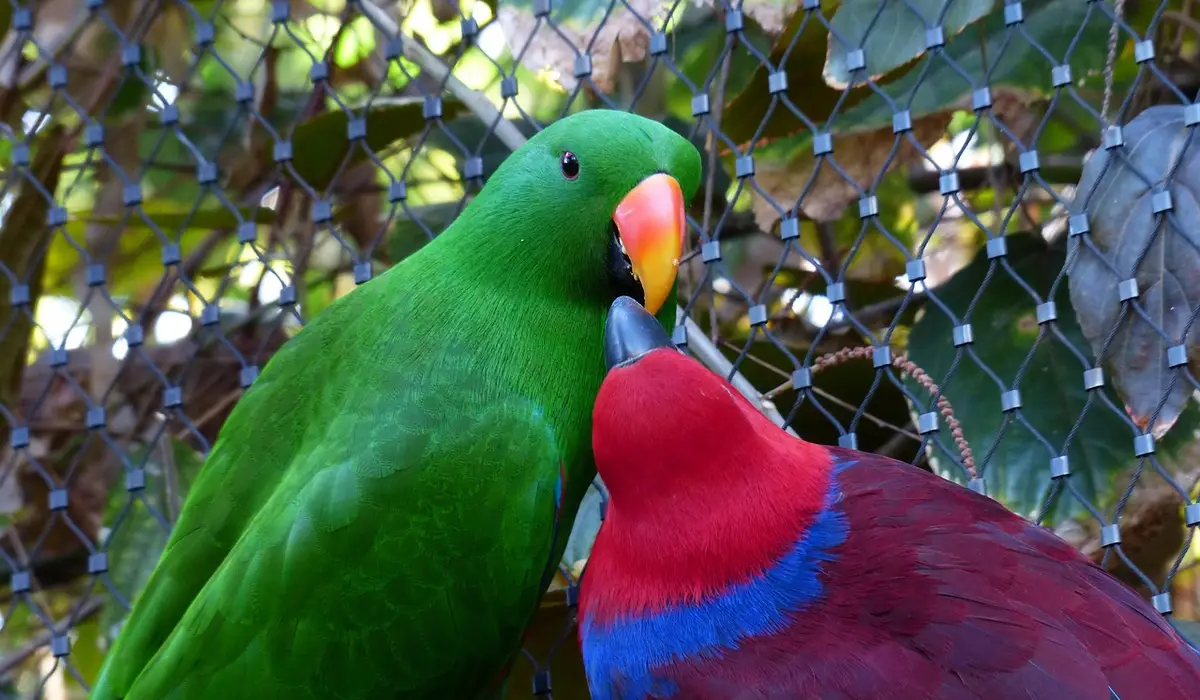
Some species, like the Eclectus parrot, display extreme sexual dimorphism. The males are vibrant emerald green, while the females are a striking red and purple – they look like completely different birds! This color coding in nature helps them identify each other and reduces competition for food sources within their own species. To determine your parrot’s gender, you can rely on visual cues in some species or use DNA methods for a definitive result.
Other parrots use color for dramatic communication. A sun conure’s body is a masterpiece of yellow, orange, and green, but when it spreads its wings, it reveals a hidden explosion of brilliant blue. My sun conure, Sunny, uses these colorful displays during play or when she’s excited to see me, making every interaction a visual spectacle.
- Camouflage Experts: Many Amazon parrots and African Greys use shades of green and grey to blend seamlessly into forest canopies, hiding from predators.
- Flashy Signals: Macaws and lorikeets sport incredibly bright and contrasting colors. This boldness signals confidence and health, warning predators that they are strong and not an easy target.
- Subtle Beauty: Don’t overlook the muted tones of a cockatiel’s grey body or the delicate scalloping on a budgie’s feathers. These subtler markings are just as complex and beautiful as the more flamboyant color schemes.
Rare and Endangered Parrots: Species at Risk
Many parrot species face serious threats from habitat loss and illegal trade, pushing them toward extinction. Protecting these birds starts with awareness and responsible actions from parrot lovers like you.
Why Some Parrots Are Disappearing
Deforestation and poaching for the pet trade hit hard on wild populations. Each lost parrot species disrupts ecosystems and reduces biodiversity in ways we can’t replace. I’ve seen the impact firsthand when learning about conservation efforts for birds like the Spix’s Macaw, which is nearly extinct in the wild.
- Habitat destruction from logging and agriculture
- Illegal capture for exotic pet markets
- Climate change altering food sources
Notable Endangered Parrots
Some parrots, like the Kakapo from New Zealand, have fewer than 200 individuals left. Caring for parrots means supporting bans on wild-caught birds and choosing adoption when possible. My experience with rescue organizations showed me how every small effort helps these vulnerable species.
- Kakapo: Flightless, nocturnal, critically endangered
- Spix’s Macaw: Blue plumage, extinct in the wild
- Philippine Cockatoo: White feathers, threatened by deforestation
Choosing Your Feathered Friend: Matching Species to Your Lifestyle
Picking the right parrot ensures a happy life for both of you. Your daily routine, home space, and personality play huge roles in finding a perfect match. I learned this through trial and error with my own flock. Consider how a bird will fit your home lifestyle and daily routine when you choose. It’s the key step in picking the right pet parrot for your home.
Assess Your Time and Energy
High-energy birds like conures need hours of interaction daily. If you work long hours, a more independent species might fit better into your life. My Sun Conure, Sunny, demands constant attention, while Sage, my African Grey, enjoys quieter moments alone.
- Busy schedules: Consider low-maintenance parrots like budgies
- Active households: Opt for social birds like lovebirds or conures
- Quiet environments: Choose calmer species such as Pionus parrots
Factor in Noise and Space
Loud calls from larger parrots can disturb neighbors in apartments. Smaller birds often adapt well to compact living spaces without sacrificing joy. Kiwi, my Green-cheeked Conure, has a playful chirp that’s manageable in my cozy home.
- Noise level: Sun Conures are vocal; African Greys are quieter
- Cage size: Match it to the bird’s wingspan and activity needs
- Out-of-cage time: Ensure safe areas for flying and exploration
Consider Lifespan and Commitment
Some parrots live over 50 years, requiring a lifelong dedication. Adopting a parrot is a long-term promise that shouldn’t be taken lightly. I’ve committed to Sage for years, and it’s taught me patience and consistency in care. Understanding the lifespan of different parrot species helps in setting realistic expectations.
- Short-lived species: Cockatiels, around 15-20 years
- Long-lived species: Macaws, up to 60 years or more
- Financial costs: Include vet bills, food, and toys in your budget
FAQs
What types of parrots are best for talking?
African Greys, Amazons, and Budgerigars excel at mimicking human speech due to their high intelligence. With consistent training and social interaction, they can develop extensive vocabularies and contextual understanding.
Where can I find parrots for sale as pets?
Reputable sources include specialized avian breeders, certified pet stores, and parrot rescue organizations for adoption. Always verify the bird’s health, legal documentation, and avoid supporting the wild-caught trade to promote ethical ownership. When evaluating options, consider the ethics of parrot breeding vs adoption and prioritize welfare-focused choices that ensure proper socialization and lifelong care. Adoption through rescue networks often provides immediate welfare benefits by rehoming birds in need.
What parrot species are commonly found in Los Angeles?
Popular pet species in LA include Conures, Cockatiels, and African Greys, often available through local breeders or avian shops. Feral populations like Red-masked Parakeets have also adapted to urban areas, frequently spotted in parks and neighborhoods.
Are there parrots in Minecraft, and what types?
Yes, Minecraft features five parrot variants based on real macaw species, such as the Red-and-blue Macaw, which players can tame with seeds. These in-game parrots mimic sounds of nearby mobs and can perch on players’ shoulders for companionship. Unlike real macaws, Minecraft parrots don’t require special care or attention.
Is there a comprehensive A-Z guide to parrot types?
Complete A-Z directories are available through ornithology resources like the IUCN Red List or avian encyclopedias, listing over 400 species with details. Online databases and parrot care websites offer searchable filters by name, region, and traits for easy reference.
In Closing
From my time with parrots like Kiwi’s playful antics and Sage’s calm intelligence, I’ve seen how each species offers unique joys and needs. Matching a parrot’s personality and care requirements to your lifestyle ensures a fulfilling bond for both of you.
Caring for a parrot means committing to their health and happiness through proper diet, enrichment, and regular vet check-ups. Keep exploring pet parrot care resources to grow alongside your bird and provide the best life possible.
Further Reading & Sources
- List of parrots – Wikipedia
- 13 Types of Parrots You Can Have As Companions [+ Care Tips]
- Parrot Encyclopedia | World Parrot Trust
Suzanne Levine is a dedicated parrot enthusiast and experienced avian caregiver with over 15 years of hands-on experience in parrot care. As the founder of Parrot Care Central, Suzanne is passionate about sharing her knowledge and insights to help fellow parrot owners provide the best possible care for their feathered friends. Her expertise spans nutrition, behavior, health, and enrichment, making her a trusted resource in the parrot care community.
African Grey Parrots